Free software for high-speed blockchain vulnerability analysis. BitResurrector generates private keys to search for collisions with addresses with positive balances, using a local Bloom filter to instantly match each attempt against a global database of active Bitcoins.

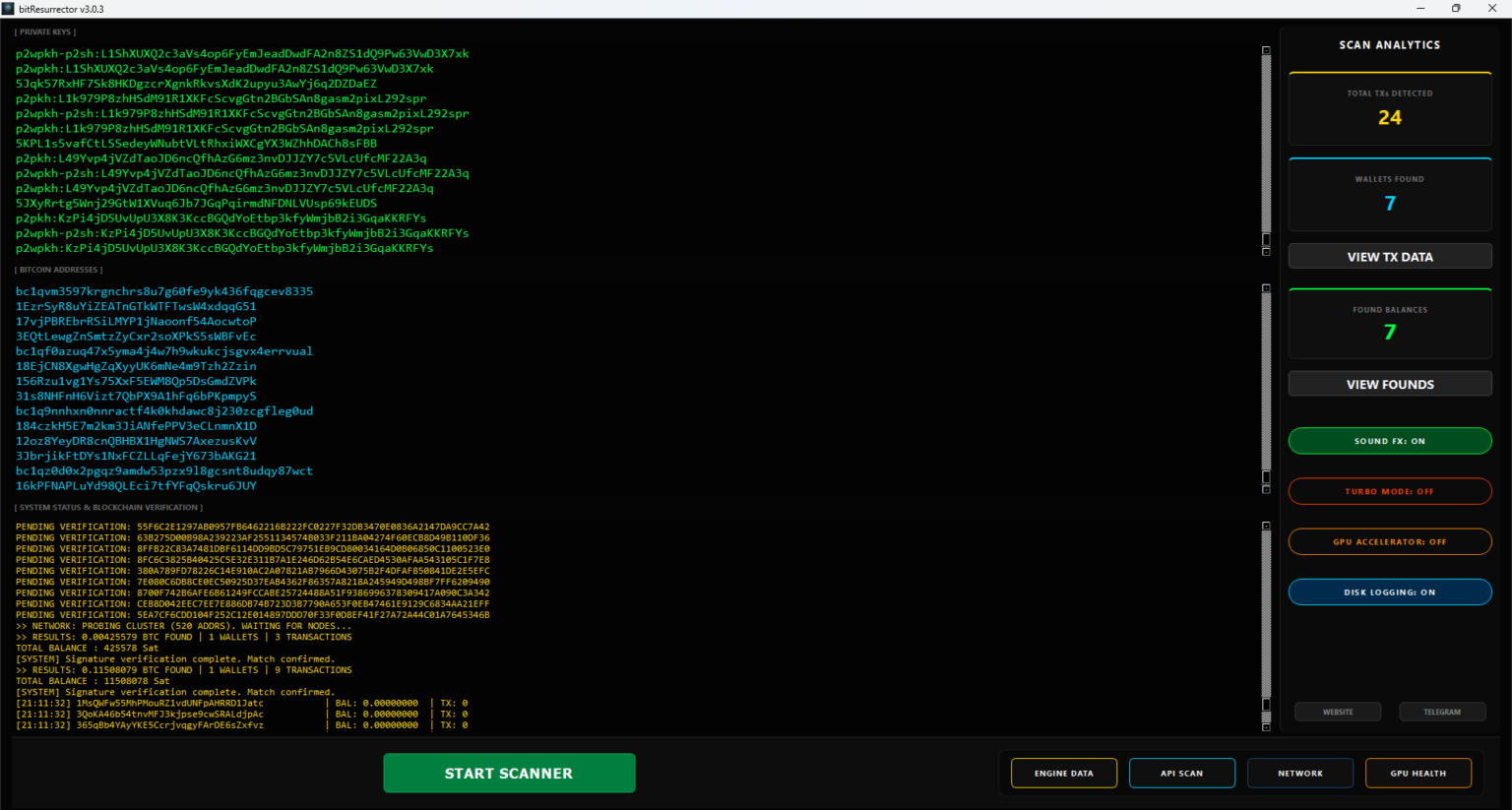
Software interface - BitResurrector GUI

bitResurrector

SHA-256: 665736d5eb50a03753ac7b9d26782247ff3cd606bc657d5ba78b84aa511670e7
Download

Project Mission

Objective 01

Personal capital and financial justice

The main incentive for every user is their direct personal benefit. The program allows anyone to use their PC resources to search for and recover abandoned Bitcoin wallets that have been considered lost for years. Finding the private key to such an address allows the user to transfer previously inaccessible funds to their accounts, instantly changing their financial status. We believe that access to "digital treasure" hunting technologies should not be a privilege for a narrow circle of people—it should be available to everyone.

Objective 02

Resurrection of abandoned coins

About 4 million BTC are permanently locked in early-era wallets (2009–2015), creating an artificial deficit and limiting ecosystem development. By returning these coins to active circulation, BitResurrector users act as network "resuscitators." Every successful transaction from a previously forgotten wallet saturates the market with liquidity and makes Bitcoin a more vibrant and functional financial instrument for the entire global community.

Objective 03

Technological audit and a challenge to humanity

BitResurrector is a large-scale project to refute the strength of cryptography foundations. Distributing the program for free allows us to prove that current Bitcoin protection is not absolute. We present humanity with a fact: if private keys can be reproduced, then current security standards need revision. The success of our project is a signal to the global industry that it is time to think about creating more advanced, quantum-resistant, and truly secure systems for storing financial values in digital form.

BitResurrector Project Mission and Goals

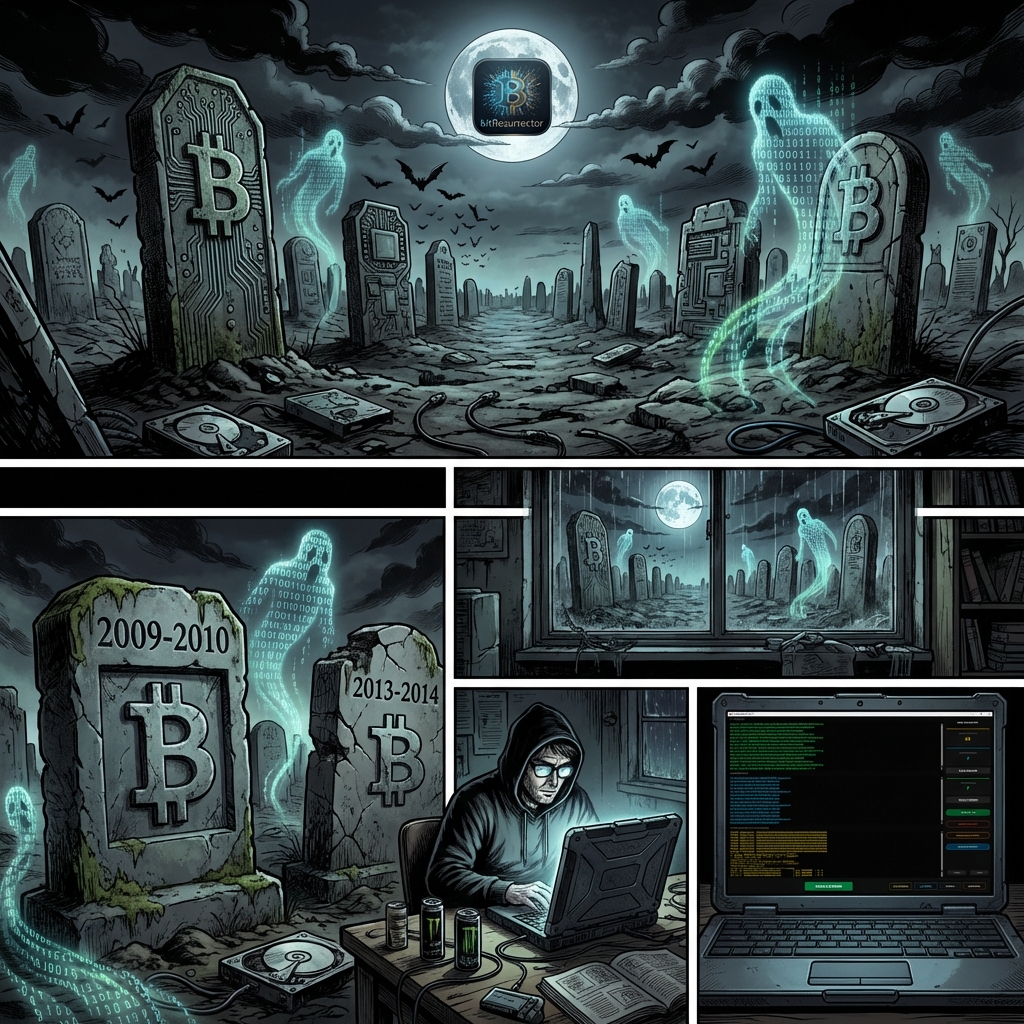
Digital Necropolis: 4 Million dormant BTC

Approximately 20% of the total Bitcoin supply remains untouched in addresses for over a decade. BitResurrector transforms your hardware into a high-performance search node focused on this "Digital Graveyard," mapping industrial-grade search geometry against these static targets. By matching generated keys in O(1) complexity, the system enables a systematic search for collisions, providing the tools needed to reclaim the world's most valuable abandoned assets.

Digital Necropolis - recovering abandoned Bitcoin assets from the digital graveyard

The Myth of "Absolute" Impossibility

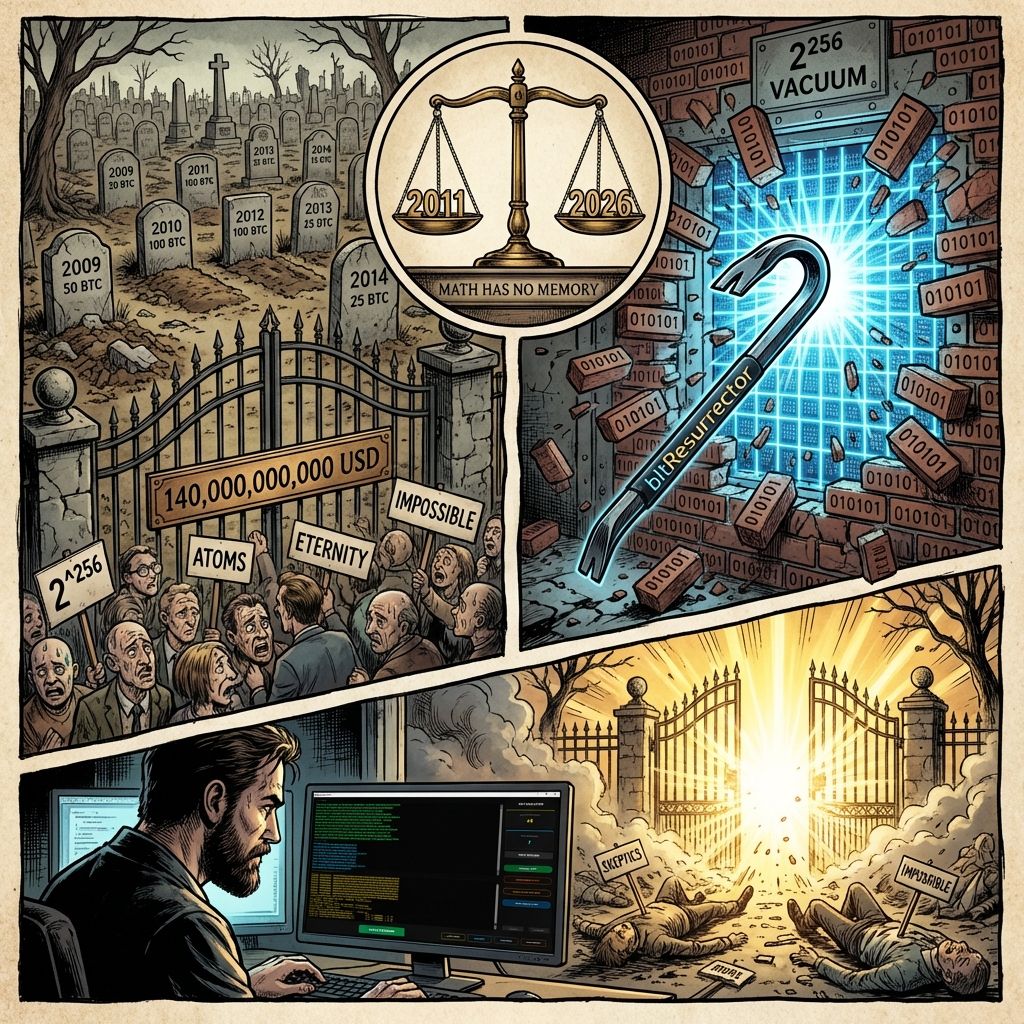
Math defies prohibitions

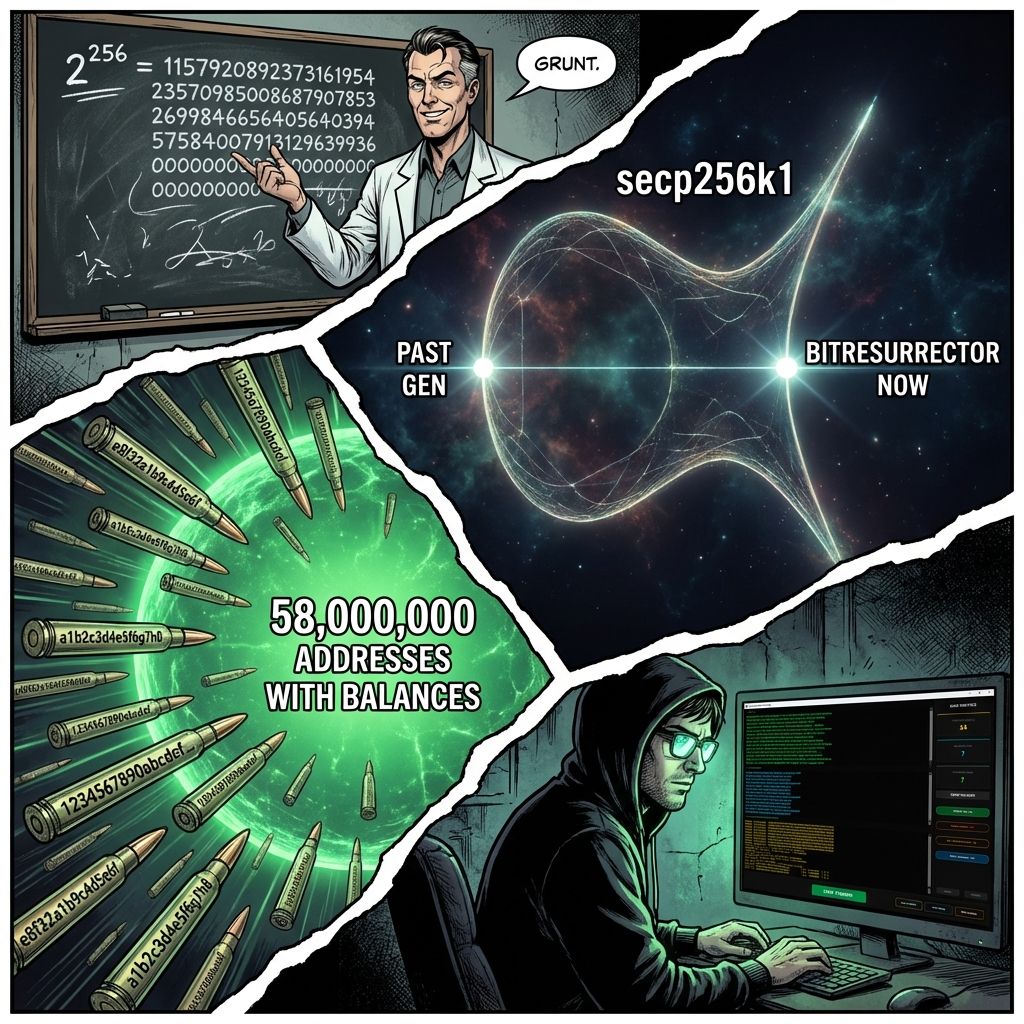
Skeptics often cite the 2^256 search space as an infinite barrier. However, mathematics knows no ownership. In the secp256k1 field, every random generation is a collision possibility. When a "rich wallet" was first initialized years ago, it was merely the result of a stochastic point generation. Any subsequent generation today—on your hardware—occupies the exact same class of random events. If it happened once, it is factually achievable again. We simply accelerate that eventuality.

The Principle of Random Equality illustration - Mining Farm vs Home PC

Turbo Core Kernel

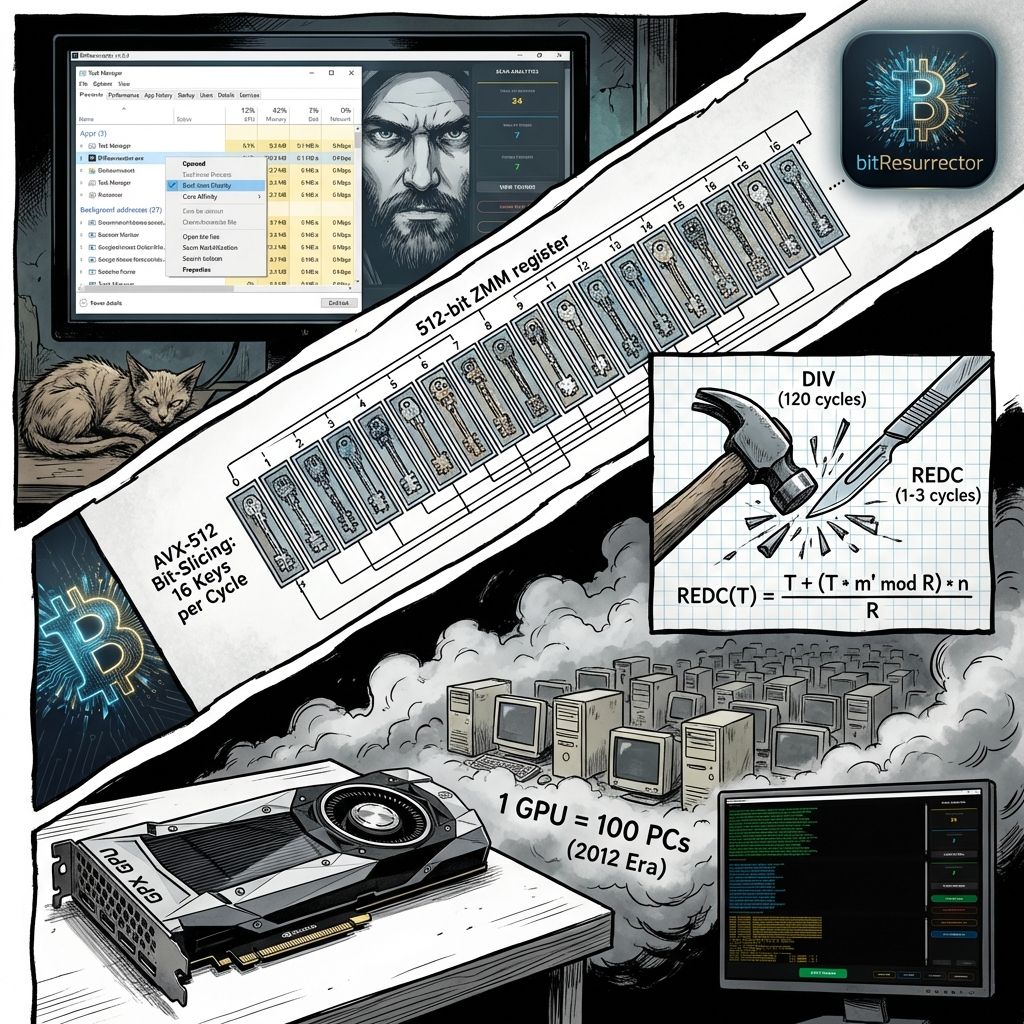
At the heart of BitResurrector lies an industrial-grade C++ kernel optimized for massive instruction-level parallelism. By shifting from legacy modular division (DIV) to Montgomery Modular Multiplication (REDC) and utilizing AVX-512 bit-slicing, the engine achieves a 85% reduction in latency per scalar generation. We transpose independent internal states across ZMM registers, effectively saturating the silicon limits of modern hardware to ensure maximum throughput across all operational profiles.

Standard CPU Thread ~3,750 Keys/s
Sniper Engine / Turbo-Core (AVX-512) 60,000 Keys/s
REDC(T) = (T + (T · m' mod R) · n) / R Turbo Core Logic: Montgomery Modular Multiplication (CPU REDC Kernel)
BitResurrector Engine Architecture and Entropy Segregation

Intelligent Entropy Filter

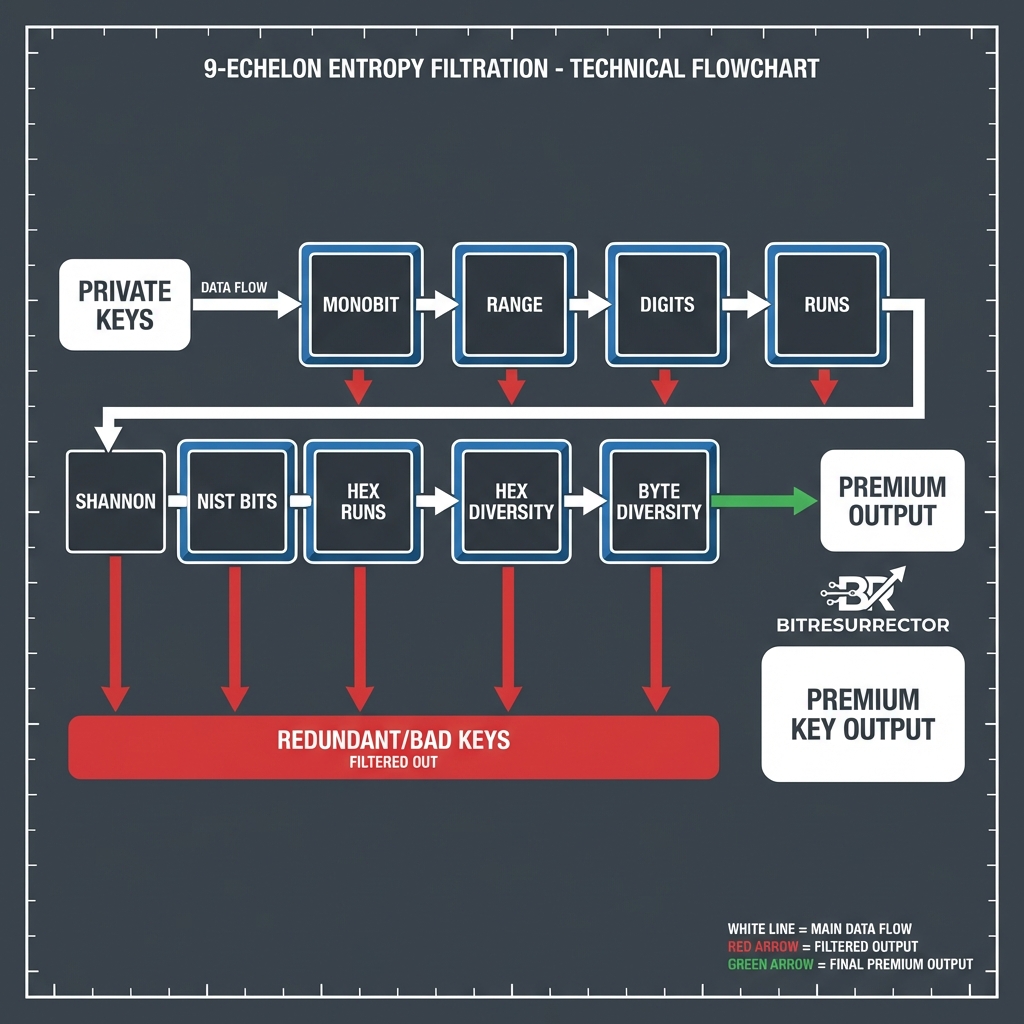
The BitResurrector v3.0 software complex implements a multi-level "Intelligent Entropy Filter" system functioning as a high-speed separator. Instead of inefficient brute force, the system subjects every generated scalar to deep statistical expertise across nine independent verification stages, guaranteeing that computational resources will not be wasted on mathematically degraded sequences.

BitResurrector Engine Scheme - Entropy Segregation Logic

Frequency Analysis of Binary Density (Monobit Test)

Primary Hamming Weight evaluation targeting the central tendency of the binomial distribution [110–146].

The primary filtration barrier performs a Hamming Weight evaluation for the 256-bit scalar. This check is a direct implementation of the Frequent (Monobit) test, regulated by the international NIST SP 800-22 specification. In a perfectly random key, the number of set bits (ones) must correspond to the central tendency of the binomial distribution.

The mathematical expectation M(W) of the number of unit bits in a vector of length n = 256 with probability p = 0.5 is 128. The standard deviation (σ) is calculated by the formula:

σ = √(n · p · (1 - p)) = 8

According to the bitResurrector specification, the filter's operating range is set within [110, 146], which corresponds to the interval M(W) ± 2.25σ. Statistically, 97.6% of all truly random keys fall into this corridor. Generated sequences exceeding these precision boundaries are marked as defective.

Numerical Gravity and Decimal Range 10^76

Subspace optimization focusing on the area of maximum information density used by professional wallets.

Since the group order n is a 77-digit number, modern standards are oriented towards generating keys of exactly this bit depth. The bitResurrector algorithm implements a strict condition:

10^76 ≤ k < 10^77

This range covers approximately 78.2% of the theoretical scalar field. From a systems engineering perspective, this is a narrowing of the search to the "elite sector" of the mathematical mass. By cutting off short keys and low-complexity passphrases, the system concentrates on the high-entropy subspace used by modern wallets (Electrum, Bitcoin Core) during standard BIP32/BIP39 generation.

Combinatorial Diversity of Decimal Alphabet

Spectral audit of unique decimal digits to identify primitive PRNGs or human-created patterns.

For each scalar, an analysis of the spectral diversity of decimal digits is performed. The probability that a 77-digit number will contain a limited set of unique digits from the alphabet ∑ = {0, 1, ..., 9}, is described through the distribution of unique symbols.

A key is recognized as valid only if there are 9 or more unique decimal digits. The probability that a truly random key will contain fewer than 9 digits is only 1.24 · 10⁻¹¹. Such a strict threshold allows instantly identifying keys generated by primitive PRNGs with a short period or deterministic "patterns" created by a human.

Serial Analysis of Repetitions (Runs Test) in the Decimal Layer

Identification of structural determinism via asymptotic estimation of decimal run probabilities.

Mechanism designed to detect anomalous repetitions of identical decimal digits. According to probability theory, the average length of the maximum run in a random decimal string is extremely small.

The asymptotic estimate of the probability of a run of length k = 7 appearing in a string of length L = 77 is calculated as:

P(Run ≥ k) ≈ (L - k + 1) · (1/10)^k

For k = 7, the value P ≈ 0.0000071. bitResurrector blocks any keys containing a run of 7 or more identical digits in a row (e.g., "0000000"), which serves as a fatal marker of structural determinism.

Metric Evaluation of Information Entropy by Shannon

Measurement of "unpredictability" via Claude Shannon's classical formula for distribution relationships.

The central analytical node measures the "unpredictability" of the key's decimal representation using Claude Shannon's classical formula:

H(X) = - Σ P(x) · log₂(P(x))

For an ideally distributed 77-digit number, the entropy indicator tends to the maximum H ≈ 3.322 bits per symbol. BitResurrector v3.0 sets a critical threshold H ≥ 3.10. Mathematically, this means that a value below 3.10 lies in a zone of deep data degradation (8+ standard deviations from normal). Unlike primitive frequency tests, this metrics evaluates the distributional relationships of all ten characters simultaneously.

Binary Series (Longest Run Test)

Implementation of the Longest Run of Ones test per NIST SP 800-22 to detect bit-sticking artifacts.

Implementation of the Longest Run of Ones test of the NIST SP 800-22 standard. In a 256-bit binary stream, the average expected length of the maximum run of identical bits is about 8 units.

E[Lmax] ≈ log2(n × p) = 7-8 bits
P(Lmax ≥ 17) ≈ 0.00097

BitResurrector blocks any keys containing a run of 17 or more identical bits in a row. This allows effectively cutting off keys with signs of "stuck" hardware data buses, characteristic of defective USB generators. Keys exceeding the binary threshold are marked by the system as Sequential Entropy Collapse.

Differential Analysis of Hexadecimal Cyclicity

Identification of repetition patterns in hexadecimal scalar space to detect raw memory artifacts.

Specializes in identifying repetition patterns in hexadecimal scalar space (64 nibbles). This stage is critical for detecting raw memory artifacts, fixed initialization patterns, and alignment errors.

The maximum allowable run of identical HEX symbols is limited to five units. The appearance of a run of 6 characters (e.g., 0xFFFFFF) is statistically unlikely:

P(Run ≥ 6) ≈ (64 - 6 + 1) × (1/16)⁶ ≈ 3.51 × 10⁻⁶

Such micro-anomalies point to memory alignment artifacts (Memory Padding) and the program ruthlessly removes them from the processing queue.

Spectral Diversity of HEX Alphabet (Unique Nibbles)

Audit of unique character count in 64-bit hex representation to identify spectral bias and compromise.

Implements a minimum unique character count check in a 64-bit hexadecimal representation of a scalar. This mechanism is aimed at identifying "spectral bias" that occurs when running flawed PRNGs or as a result of state compromise cryptographic attacks.

For perfectly random data, the expected value of the number of unique HEX characters is ≈ 15.75. The probability that such a string will contain "fewer than 13 unique characters" is:

P(k < 13) ≈ Σ P(X=i) ≈ 1.34 × 10⁻¹¹

A drop in the indicator to 12 and below is direct proof that the generation algorithm has "blind spots" in its phase space.

Metric of Byte Diversity

Analysis of 32-byte structure according to AIS 31 standard to detect extreme byte collapse.

Final segregation level analyzes the 32-byte structure of the key according to the international AIS 31 standard. A high-quality key must demonstrate a high degree of sparsity at the level of full bytes (0–255).

Mathematical expectation E[U] ≈ 30.12. BitResurrector sets a threshold of minimum 20 unique bytes out of 32 possible.

P(U < 20) < 10⁻¹⁶

A drop below 20 indicates an extreme "byte collapse" of entropy. Such a key is not a product of cryptography; it is a mathematical corpse not worth your equipment's time.

O(1) Verification

Detailed Architecture Diagram of BitResurrector Bloom Filter Implementation

The Bloom Atlas

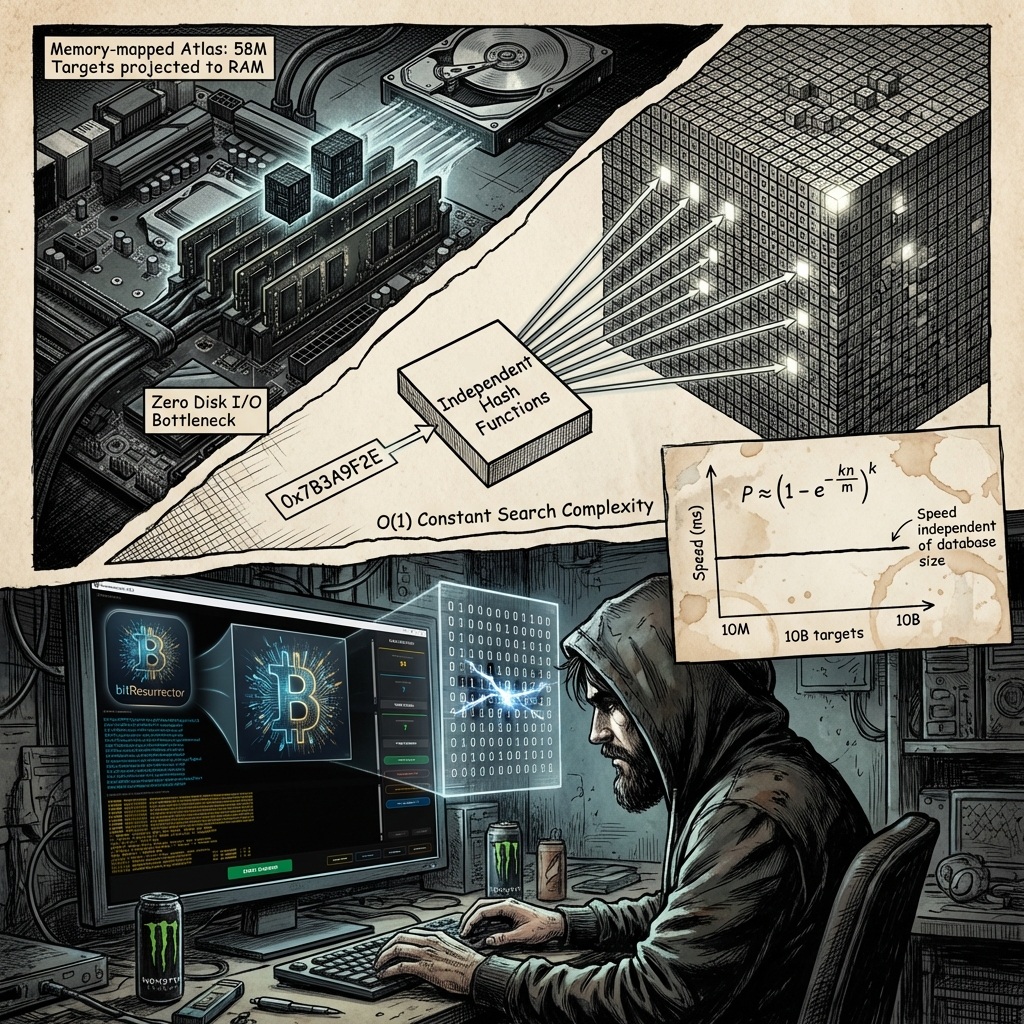
To eliminate disk I/O bottlenecks, BitResurrector compresses 58 million active targets into a multi-layer Bloom Filter Matrix. Using memory-mapped files (mmap), the entire atlas is projected directly into RAM, allowing for O(1) complexity lookups.

Every scalar produced by the Sniper Engine is instantly cross-referenced against this probabilistic index. This architecture enables millions of verifications per second with a theoretical false positive rate (FPR) of nearly zero, ensured by independent hashing functions.

P ≈ (1 - e^(-kn/m))^k False Positive Rate (FPR) Calculation

Stochastic GPU Geometry

"Random Bites" Strategy

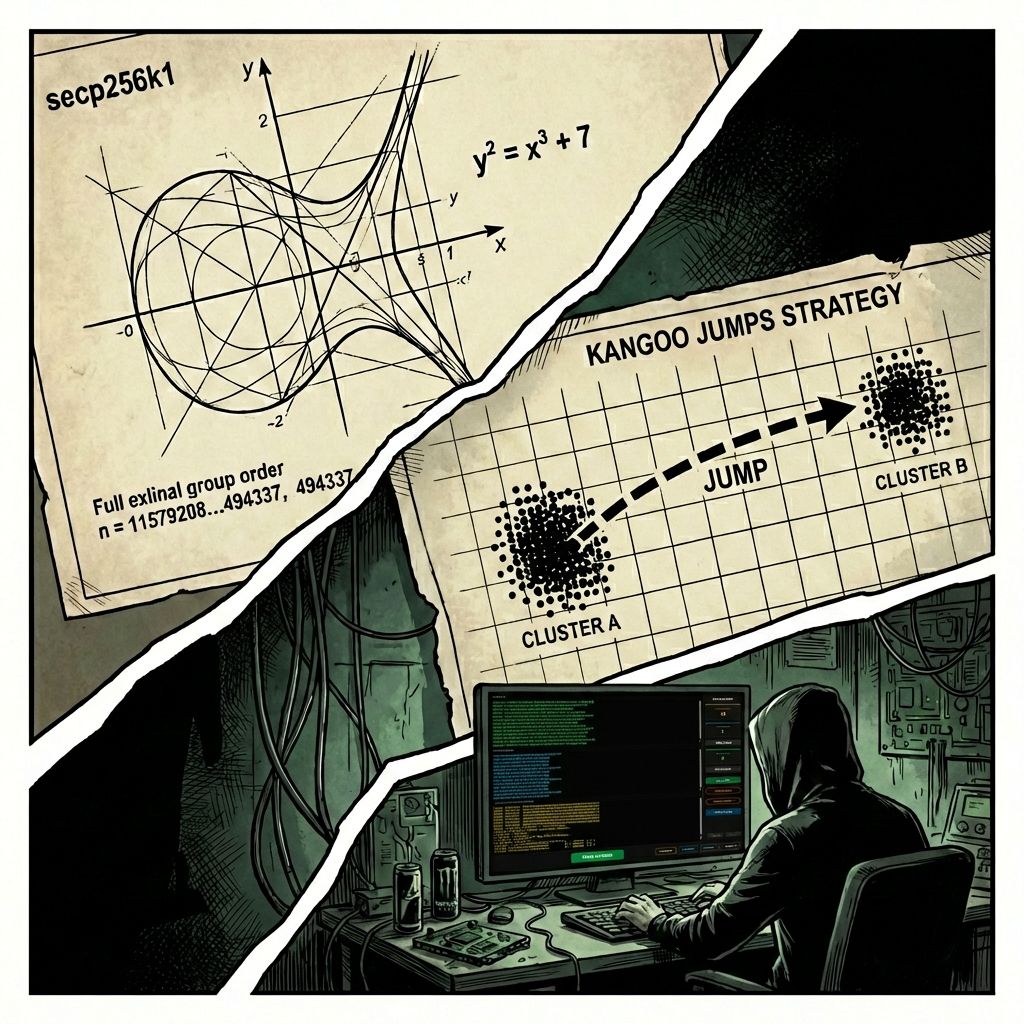
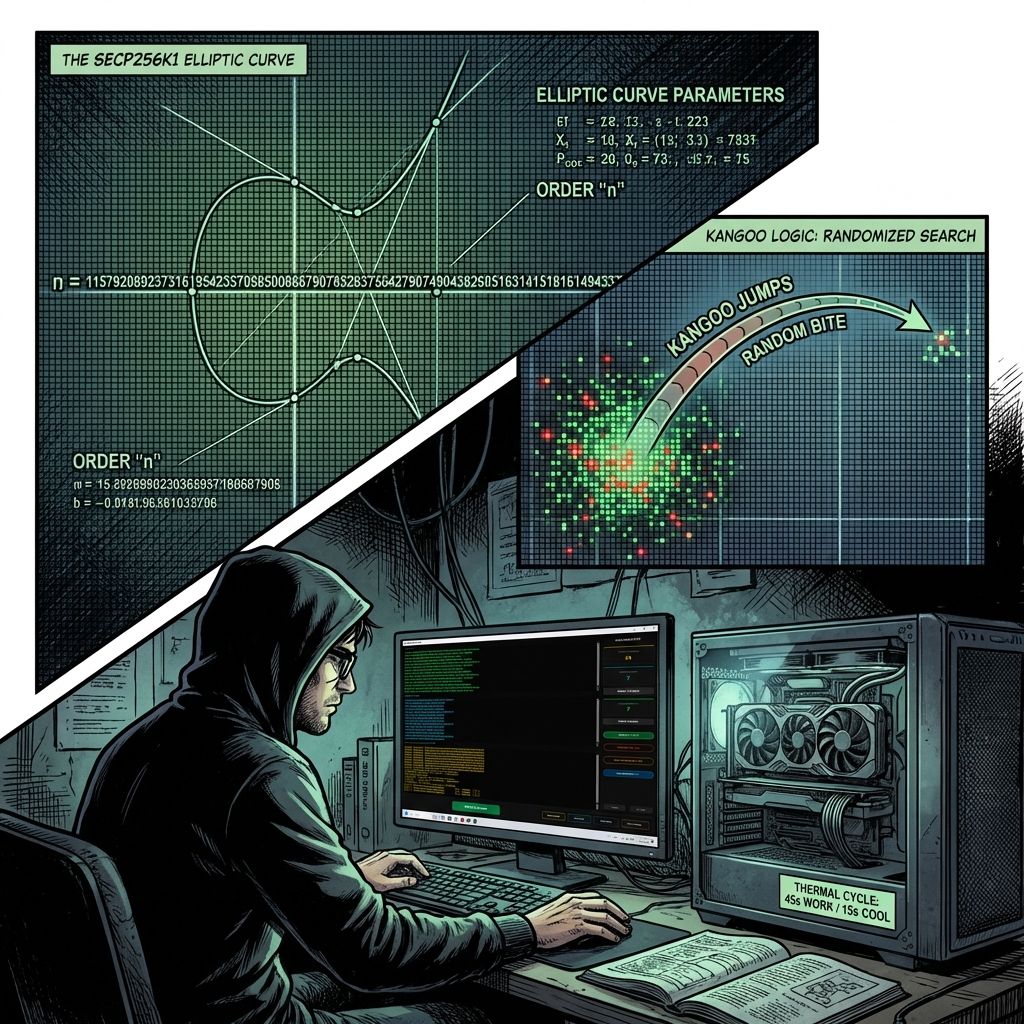
Linear scanning of the 2^256 space is statistically futile. BitResurrector utilizes a stochastic search geometry on NVIDIA CUDA known as the Kangoo Jumps method. The architecture is designed for massive scalability across all hardware tiers: for example, a high-performance card like the RTX 4090 can easily demonstrate throughput of 333.3M Keys/s, maximizing collision probability with industrial-grade precision on any compatible GPU.

BitResurrector GPU Accelerator Mode Settings Interface

Thermodynamic Duty

To preserve industrial longevity of your hardware, the Sniper Engine employs a proprietary 45/30 Thermal Cycle. The system operates at 100% vector saturation for 45 seconds, followed by a mandatory 30-second "cool-down" phase.

[SENSOR_LOG]: Adaptive cycle active. Intelligence will trigger earlier restart only if T_die < 65°C.

This hardware-aware approach prevents VRM thermal fatigue and electromigration during 24/7 autonomous recovery operations.

BitResurrector Interface showing Turbo Core Mode Activation

Operational Architecture

BitResurrector operates as a high-precision extraction environment. The system orchestrates three specialized execution profiles to maximize entropy coverage and ensure 100% verification accuracy against the secp256k1 field.

Sniper

Offline Logic Hub. High-speed local audit using an O(1) Bloom Filter against a 58M address database. Optimized for maximum private key generation throughput on AVX-512 and CUDA architectures.

API Global

Multi-Standard Verification. Simultaneous checks across Legacy (1), P2SH (3), and Bech32 (bc1) formats via distributed node clusters. Ensures real-time balance discovery with zero false negatives.

Puzzle Solver

Targeted Range Scouting. Strategic extraction within specific bit-ranges (71-bit to 160-bit). Designed for solving cryptographic puzzle transactions from btcpuzzle.info with mathematical precision.

STABLE RELEASE

Stable x64 release build. Full compatibility across Windows 7, 8, 10, and 11 environments.

DIRECT DOWNLOAD

System Specifications

Hardware Component Min requirements (Stable search) Recommended (High performance)
Processor (CPU) Intel/AMD with AVX2 Support AVX-512 + BMI2 (Turbo Core enabled)
Memory (RAM) 4 GB (mmap minimal resident set) 16 GB (Full Bloom Matrix residency)
Video Card (GPU) CUDA Compute 3.5+ / OpenCL 1.2 NVIDIA RTX 30+ (Compute 8.6+)
Storage Drive Any HDD (Index Swap enabled) NVMe SSD (Ultra-low page faults)
Operating System Windows 10/11 x64 Windows Server / 10 / 11 x64
Access Rights Administrator (Direct GPU Access) Administrator Permission